
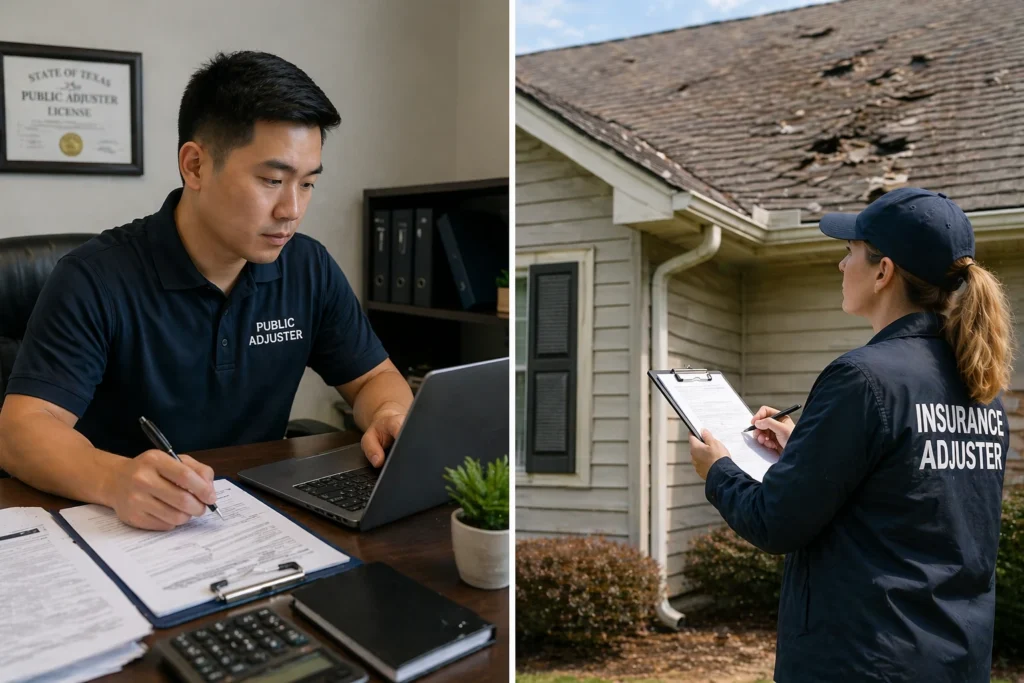
Hail doesn’t knock politely. It slams into your roof, your siding, your peace of mind and then it leaves you to deal with the aftermath. That’s where the real challenge begins. If you’re navigating a Public Adjuster vs. Insurance Adjuster for Hail Claims in Texas decision, you’re already ahead of most homeowners. Because this choice? It can directly impact how much money you recover and how stressful the process becomes.
I’ve seen it play out both ways. One homeowner trusts the insurance company’s adjuster and accepts the first estimate. Another brings in a public adjuster and pushes for a full evaluation. Same storm. Same neighborhood. Very different outcomes. That difference often comes down to one thing representation. This guide breaks it all down. No fluff. Just what you need to make a smart call.
Understanding Hail Damage Claims in Texas
Texas doesn’t just get hailstorms it leads the country in them. Cities like Dallas are frequent targets, and the damage isn’t always obvious at first glance. That’s part of what makes these claims tricky.
Here’s what hail typically impacts:
- Roofing systems (shingles, flashing, underlayment)
- Gutters and downspouts
- Siding and exterior paint
- Windows and screens
- Outdoor fixtures like HVAC units and vents
The real problem? Not all damage is visible. Micro-fractures in shingles or compromised seals can go unnoticed, yet they shorten the lifespan of your roof significantly. Over time, those small issues turn into leaks, structural concerns, and expensive repairs.
And here’s the uncomfortable truth: insurance claims are often underestimated on the first pass. Not always malicious but definitely common. Adjusters work fast, storms create high claim volume, and details get missed.
What Is an Insurance Adjuster?
An insurance adjuster is assigned by your insurance company to evaluate your claim. They inspect the damage, create an estimate, and determine how much the insurer will pay.
Simple enough. But here’s the key detail most homeowners overlook:
They work for the insurance company. Not for you.
There are two main types:
- Staff adjusters (employees of the insurer)
- Independent adjusters (third-party contractors paid by insurers)
Their responsibilities include:
- Inspecting your property
- Documenting visible damage
- Writing a repair estimate
- Approving or denying parts of your claim
They follow company guidelines. They use standardized estimating tools. They aim for consistency across claims. That sounds efficient and it is but it doesn’t always capture the full reality of your damage.
What Is a Public Adjuster?
A public adjuster flips the script.
Instead of representing the insurance company, they represent you the policyholder. Licensed in Texas, they step in to evaluate your damage independently and negotiate on your behalf.
Here’s what they typically do:
- Conduct a detailed inspection (often more thorough than initial assessments)
- Document every layer of damage, including hidden issues
- Interpret your insurance policy
- Build a stronger claim file
- Negotiate directly with the insurer
They usually work on a contingency fee, meaning they get paid a percentage of the final settlement. No upfront cost. That alone changes the dynamic they only succeed when you do.
Public Adjuster vs. Insurance Adjuster for Hail Claims in Texas: Side-by-Side

Let’s make it crystal clear:
| Factor | Insurance Adjuster | Public Adjuster |
| Who they work for | Insurance company | You (homeowner) |
| Primary goal | Control claim costs | Maximize fair payout |
| Inspection depth | Often surface-level | Highly detailed |
| Negotiation role | Represents insurer | Represents you |
| Payment structure | Salary/contract | % of settlement |
When comparing Public Adjuster vs. Insurance Adjuster for Hail Claims in Texas, the difference isn’t subtle it’s structural. One protects the insurer’s financial interests. The other protects yours.
How Each Adjuster Handles a Hail Claim
Insurance Adjuster Workflow
- Schedules inspection
- Evaluates visible damage
- Creates estimate using standardized software
- Issues initial offer
That’s usually it. If something is missed, you’re responsible for catching it and pushing back. Many homeowners don’t realize this until it’s too late.
Public Adjuster Workflow
- Performs independent inspection
- Captures extensive photo and written documentation
- Identifies missed or hidden damage
- Prepares a comprehensive estimate
- Negotiates for adjustments and supplements
They don’t just review your claim. They rebuild it with stronger evidence. That difference alone can significantly change your final payout.
Where Homeowners Get Stuck Without Representation
This is where things get real.
Without a public adjuster, homeowners often face:
- Low initial estimates that don’t reflect full repair costs
- Missed damage especially beneath shingles or within structural systems
- Claim delays due to repeated follow-ups
- Partial denials based on policy wording
- Pressure to settle quickly
And here’s the kicker once you accept a settlement, reopening the claim becomes much harder. That first decision matters more than most people realize.
When Should You Hire a Public Adjuster in Texas?
Not every claim needs one. But many do.
Consider hiring a public adjuster if:
- You received a lowball offer
- Your claim was partially or fully denied
- Damage is extensive or complex
- You don’t have time to manage inspections and paperwork
- You suspect hidden damage
Even bringing one in for a consultation can give you clarity. Sometimes, a second set of eyes is all it takes to uncover what was missed.
Real Cost vs. Real Value
Let’s talk numbers. Public adjusters typically charge 5% to 15% of your settlement. That might sound like a lot until you compare outcomes.
Example Scenario:
| Scenario | Settlement | After Fees |
| Without Public Adjuster | $12,000 | $12,000 |
| With Public Adjuster | $25,000 | ~$21,250 |
Even after fees, the difference is clear.
But value goes beyond dollars. You also gain:
- Less stress
- Fewer delays
- Stronger documentation
- Professional negotiation
That combination often leads to better results and a smoother experience.
Texas-Specific Rules You Should Know
Texas has strict regulations around claims and adjusters, and knowing them can give you an edge.
Here are a few essentials:
- Public adjusters must be licensed by the state
- You have deadlines to file and supplement claims
- Policies often include an appraisal clause for dispute resolution
Insurance policies also rely on technical valuation principles like indemnity, which ensures compensation reflects the actual loss rather than profit. If you want to explore the deeper concept, you can review Indemnity and how it shapes payouts. Understanding these rules can prevent costly mistakes and missed opportunities.
How to Choose the Right Public Adjuster in Dallas
Not all adjusters are equal. Choose carefully.
Look for:
- Texas licensing (non-negotiable)
- Experience with hail claims specifically
- Strong local knowledge of Dallas storm patterns
- Transparent fee structure
- Verified client results
Ask questions. Request examples. A qualified public adjuster should be able to explain their process clearly and confidently.
Red Flags to Avoid
Not every adjuster operates with integrity. Stay alert.
Watch out for:
- Unlicensed operators
- Unrealistic promises
- High-pressure contracts
- Lack of documentation
- Poor communication
If something feels rushed or unclear, take a step back. The right professional will never pressure you into a decision.
A Real-World Outcome Comparison
Let’s make this tangible.
A Dallas homeowner files a hail claim:
- Insurance adjuster estimate: $14,500
- Public adjuster re-evaluation identifies additional damage
- Final negotiated settlement: $31,000
Same property. Same storm. Different result. That’s what happens when every detail is documented and properly presented.
Why Supplements Matter More Than You Think
Initial estimates rarely capture everything. That’s where supplements come in.
Supplements are additional claim requests that account for:
- Hidden damage
- Code-required upgrades
- Material and labor cost changes
A skilled public adjuster knows how to identify these gaps and justify them with evidence. This is often the difference between a partial payout and a full recovery.
Final Verdict: Who Should You Trust?
Let’s be honest.
When comparing Public Adjuster vs. Insurance Adjuster for Hail Claims in Texas, you’re not choosing between two equal advocates. You’re choosing between:
- Someone who represents the insurer
- Someone who represents you
That’s the difference.
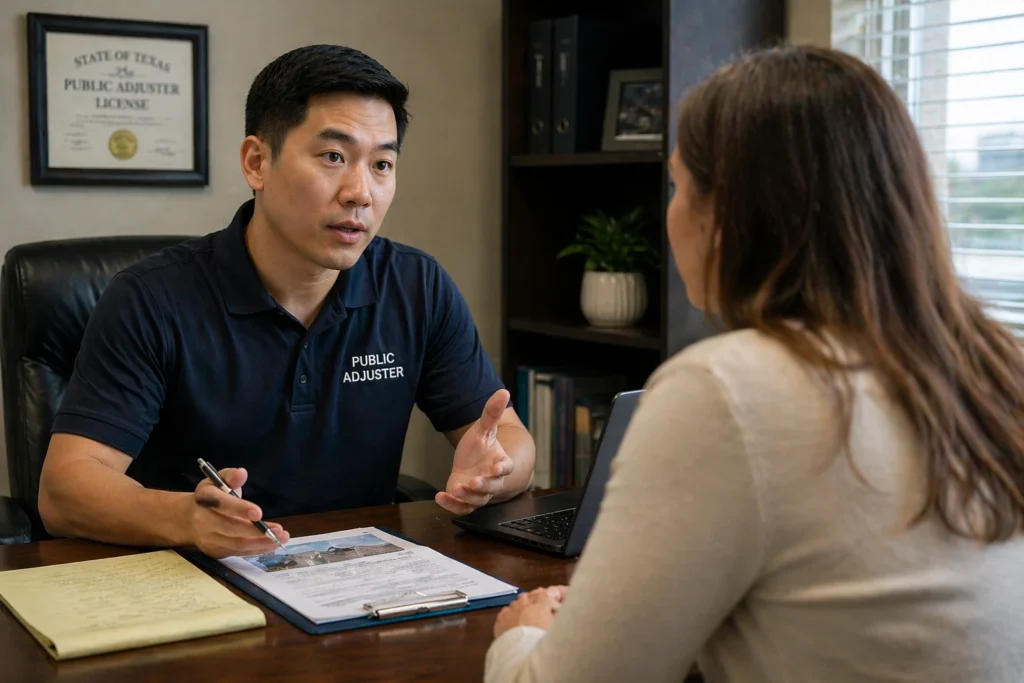
If your claim is simple and fairly handled, you might not need extra help. But if there’s any doubt any gap you want someone in your corner. Someone who knows how to push back, document thoroughly, and negotiate effectively.
Conclusion: Protect Your Property and Your Payout
Hail damage isn’t just about dents and cracks. It’s about what those damages cost you over time. Left unaddressed, even minor issues can lead to major repairs. And how much of that cost you recover depends on how your claim is handled. If you take one thing from this guide, let it be this: You don’t have to go through the process alone. The right support can change everything.
FAQs
A public adjuster works for you, while an insurance adjuster works for the insurance company
Not always, but they’re helpful if your claim is complex, underpaid, or denied.
They typically charge 5% to 15% of your final settlement, with no upfront fees.
Yes, you can bring in a public adjuster at any stage of the claims process.
In most cases, it actually speeds things up by improving documentation and communication.
They often work under time constraints and may focus only on visible or surface-level damage.
A public adjuster can review your case and help reopen or challenge the denial.
Yes, they must be licensed by the state and follow strict regulations.
They identify overlooked damage, provide detailed documentation, and negotiate directly with insurers.
In many cases, yes the increased settlement often outweighs their fee.