

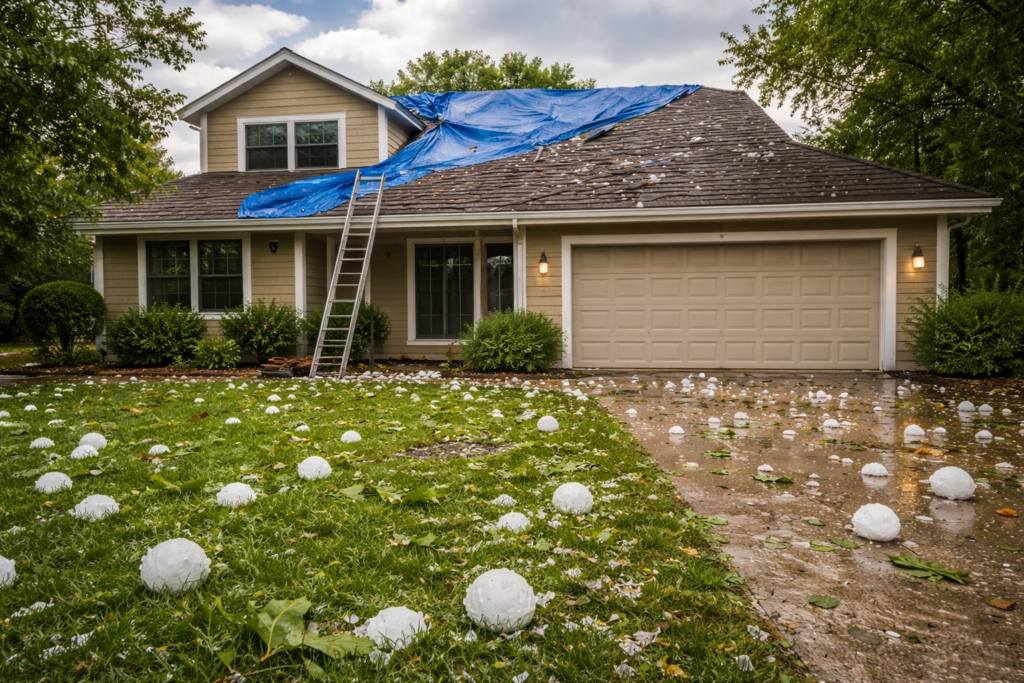
A single storm can change everything. One loud night of pounding hail and suddenly you’re dealing with a roof hail damage insurance claim Texas homeowners face every year. It happens fast. It feels overwhelming. And if you’re in places like Dallas, it’s not a matter of if, but when.
I’ve seen it play out too often. A homeowner assumes the roof is fine because there’s no immediate leak. Weeks later, water stains appear. Then mold. Then frustration because the claim gets delayed or underpaid. This isn’t just about fixing a roof. It’s about protecting your investment and navigating a system that isn’t always straightforward. Let’s break it down step by step.
Why Texas (and Dallas) Homes Are Highly Vulnerable to Hail Damage
Texas leads the nation in hail claims. And Dallas sits right in a high-risk corridor where severe storms are frequent and intense.
Here’s why this matters:
- Hailstorms in North Texas can produce large, dense ice
- Roofs often take repeated impacts over time
- Insurance carriers closely scrutinize claims in cities like Dallas
The result? Filing a hail damage on roof insurance claim isn’t just about damage it’s about proving it clearly and correctly.
How to Identify Hail Damage by Roof Type (Expert-Level Breakdown)
Not all roofs react the same way to hail. Understanding the differences is key to building a strong roof hail damage insurance claim Texas.
Asphalt Shingle Roofs
The most common roofing type and the most debated in claims.
Look for:
- Granule loss exposing darker spots
- Soft bruising when touched
- Circular impact patterns
Hail damage is random. Wear and tear is uniform. That distinction matters. When hail impacts shingles, the energy transfer varies depending on surface density similar in principle to how Piezoelectricity reacts to pressure, helping explain why some materials show visible damage while others don’t.
Metal Roofs
Metal doesn’t crack it dents.
Signs include:
- Visible dents or dimples
- Coating damage
- Distorted seams
Many insurers call this cosmetic. But if seams or coatings are compromised, it becomes a valid hail roof damage insurance issue.
Tile Roofs (Clay or Concrete)
Durable, but brittle under impact.
Watch for:
- Chips and cracks
- Dislodged tiles
- Microfractures
These often go unnoticed without a detailed inspection.
Flat Roof Systems
Common on commercial buildings.
Damage includes:
- Membrane punctures
- Surface bruising
- Water pooling
Damage may not appear immediately, making professional inspections essential.
Immediate Steps to Take After a Hailstorm in Dallas or Anywhere in Texas

Time is critical after a storm.
1. Perform a Ground-Level Inspection
- Check gutters, siding, and outdoor fixtures
- Look for dents and debris
2. Document Immediately
- Take wide and close-up photos
- Capture video walkthroughs
3. Prevent Further Damage
- Use tarps if needed
- Keep receipts for repairs
4. Avoid Rushing Decisions
- Don’t accept the first offer
- Don’t rely on a single inspection
5. Call a Professional
Especially in Dallas, where claims are heavily reviewed, expert documentation matters.
How to Document Hail Damage for an Insurance Claim
Strong documentation can make or break your case.
Photo & Video Evidence
- Capture entire roof sections
- Zoom into impact points
- Include collateral damage
Create a Damage Inventory
Document:
- Roof areas affected
- Exterior damage
- Interior issues
Verify the Storm
Use hail reports and weather data to support your claim.
Professional Inspection Reports
These should include:
- Detailed notes
- Marked damage areas
- Photo evidence
This is essential for any roof hail damage insurance claim Texas.
Hail Damage Claim Supplements: What Carriers Miss in Their Scope
Initial insurance estimates are often incomplete. That’s not rare it’s expected.
Commonly Missed Items
- Flashings and vents
- Ridge caps
- Soft metals
- Underlayment
Partial vs Full Replacement Issues
Partial repairs can create long-term problems:
- Mismatched materials
- Reduced durability
- Future leaks
Code Upgrade Omissions
Texas building codes may require upgrades. These are frequently overlooked in initial estimates—especially in Dallas claims.
Understanding the Supplement Process (How to Get Paid What You Deserve)
Supplements are how claims get corrected.
What Is a Supplement?
A request for additional funds beyond the initial estimate.
When to File One
- New damage is discovered
- Scope differences arise
- Code upgrades are required
Process Overview
| Step | Action |
| 1 | Identify missing damage |
| 2 | Submit documentation |
| 3 | Negotiate with insurer |
| 4 | Receive additional funds |
Common Mistakes
- Accepting the first estimate
- Poor documentation
- Delayed submissions
A strong supplement can significantly increase your hail damage on roof insurance claim payout.
Why Hiring a Public Adjuster Changes the Outcome
Understanding the difference between a Public Adjuster vs. Insurance Adjuster for Hail Claims in Texas is critical, because one represents the insurer while the other represents you.
What a Public Adjuster Does
- Inspects damage thoroughly
- Prepares claim documentation
- Negotiates on your behalf
Why It Matters
Insurance adjusters protect the company. Public adjusters protect your claim.
Dallas Case Insight
In Dallas, homeowners working with public adjusters often achieve:
- Higher settlements
- More complete repairs
- Faster resolutions
Advanced Claim Strategies Most Homeowners Miss
Want an edge? Focus here.
1. Document Soft Metals First
Gutters and vents clearly show impact.
2. Get Multiple Inspections
Different perspectives reveal more damage.
3. Review Your Policy Carefully
Understand:
- Coverage limits
- Deductibles
- Exclusions
4. Track Everything
Keep records of all communication.
5. Challenge Low Estimates
You’re allowed to dispute.
What to Do If Your Hail Claim Was Denied in Texas
A denial isn’t final. It’s often the beginning of negotiation.
Start by:
- Requesting a detailed denial explanation
- Getting a second professional inspection
- Submitting additional documentation
Many denied claims are later approved when properly supported.
Common Mistakes That Can Ruin Your Claim
Avoid these:
- Waiting too long
- Weak documentation
- Accepting low payouts
- Hiring inexperienced contractors
- Ignoring policy details
Each one weakens your claim.
Texas Insurance Claim Timeline: What to Expect
| Stage | Description |
| Claim Filed | Notify insurer |
| Inspection | Adjuster reviews damage |
| Estimate | Initial payout |
| Repairs | Work begins |
| Supplement | Additional funds requested |
| Final Payment | Claim closed |
Expect delays and plan ahead.
Pro Tips to Protect Your Roof Before the Next Hailstorm
Preparation saves money.
- Schedule annual inspections
- Use impact-resistant materials
- Maintain gutters
- Review insurance coverage yearly
Final Thoughts: Take Control of Your Roof Hail Damage Insurance Claim in Texas
Hailstorms are unpredictable. Your response doesn’t have to be. If you’re in Dallas or anywhere in Texas, understanding the roof hail damage insurance claim Texas process gives you real control.
You know what to look for. You know how to document it. You understand what insurers may miss and how to push back. That’s the difference. Because this isn’t just about your roof. It’s about protecting your home, your finances, and your peace of mind. Act early. Stay informed. And don’t settle for less than what your claim is worth.
FAQs
Look for granule loss, dents, or soft bruising on shingles, along with damage to gutters or vents.
Yes, many claims are approved based on structural damage even if leaks haven’t appeared yet.
Most policies require filing within 6 months to 1 year, but it’s best to act immediately after the storm.
Hail claims are typically considered “acts of nature,” but repeated claims in your area may influence rates.
Take clear photos, videos, and notes of all affected areas, including roof surfaces, gutters, and interior damage.
A supplement is a request for additional funds when initial estimates miss damage or required repairs.
Yes, homeowners have the right to select their own licensed contractor for roofing work.
You can request a reinspection, provide additional evidence, or work with a public adjuster to reopen the claim.
It depends on your policy; some insurers exclude cosmetic damage unless it affects functionality.
Not always, but a public adjuster can help maximize payouts and handle negotiations for complex claims.