Key takeaways
- Re-roofing and most structural repairs in Dallas generally require a permit from the City of Dallas Planning & Development Department.
- Repairs must meet the city’s adopted International Residential Code and International Building Code, with local amendments.
- Code requirements do not automatically mean the insurer pays for upgrades. That depends on ordinance or law coverage.
- Ordinance or law coverage is often a separate, limited amount, and it is commonly paid after the work is completed.
- Document code requirements in writing, with permit records, inspection notes, and code references.
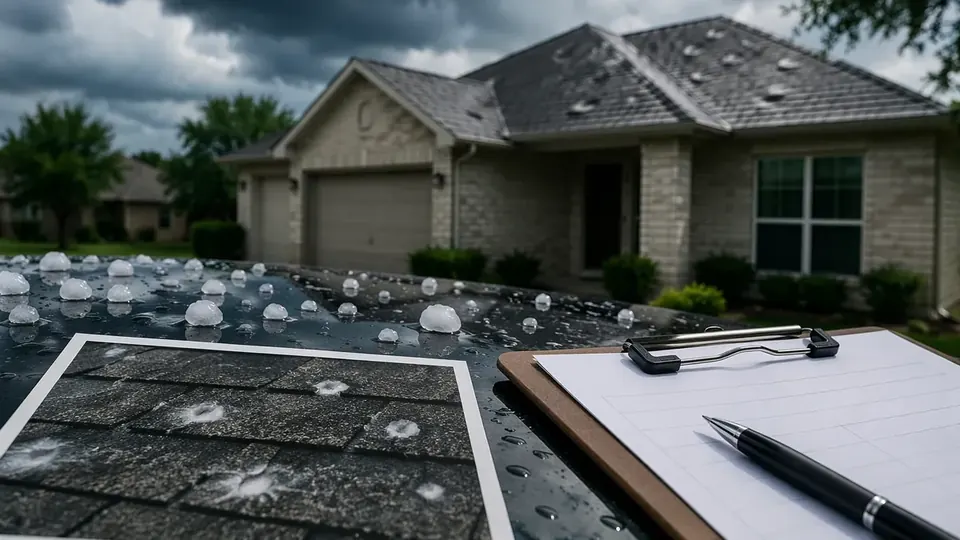
When hail, wind, fire, or water damages a Dallas home or business, the repair is not just a matter of putting back what was there. Once work requires a permit, it generally has to meet the building codes the city enforces today, not the codes in force when the building went up. That gap between “like it was” and “to current code” is where many claims get complicated. Understanding how building codes and insurance repairs interact in Dallas can save you from surprises halfway through a project.
This guide explains how permits work in Dallas, where code requirements tend to show up on claims, and how ordinance or law coverage pays for upgrades. It reflects what we see at Dallas Public Adjuster on code-heavy claims, but it is general information, not legal or engineering advice. Your policy wording and the city’s requirements control.
Permits through the City of Dallas
Inside Dallas city limits, building permits and inspections run through the City of Dallas Planning & Development Department. Permits are applied for online through the city’s DallasNow permitting portal. Re-roofing and most structural repairs generally require a permit, and electrical, plumbing, and mechanical work usually requires its own trade permits by licensed contractors. Confirm what your specific project needs with Planning & Development before work starts.
Dallas County is made up of many cities, and each one runs its own building inspection and permit office. If your property is in Highland Park, University Park, Richardson, Garland, Irving, Mesquite, Carrollton, Grand Prairie, Plano, Rowlett, or another suburb, contact that city instead. Requirements, amendments, and fees can differ from one city to the next, even across the street.
In most cases, the contractor pulls the permit and schedules the inspections. Ask for the permit number and keep copies of the permit and the final inspection. Those records help prove the work was done and can support a request for recoverable depreciation or code-related payments.
What codes apply in Dallas
Dallas adopts the International Residential Code for one- and two-family homes and the International Building Code for commercial and multifamily buildings, along with related codes for plumbing, mechanical, energy, and fuel gas work, plus the electrical code. The city adds local amendments and updates its adopted editions from time to time. Because the edition in effect can change, confirm the current version for your project with the city. Our local building codes page collects permit and code information for Dallas and nearby cities.
Manufacturer installation instructions also matter. Roofing and siding manufacturers publish installation requirements, and the codes generally require following them. An estimate that ignores them may leave out required components.
Where codes and claims meet
Roofs
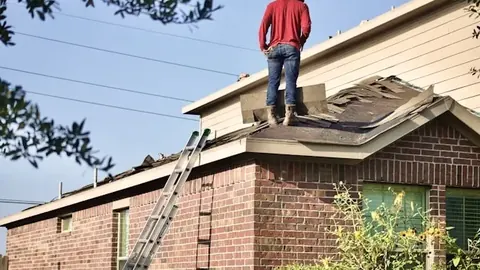
Roof claims are the most common place code questions come up in Dallas, simply because of how often hail and wind damage roofs here. Items that may be required during a permitted re-roof include:
- Removing existing layers when the code limits how many roof coverings are allowed.
- Underlayment that meets current requirements, and additional protection at valleys or penetrations where required.
- Drip edge at eaves and rakes.
- Replacing damaged or deteriorated decking, and re-nailing or adding sheathing where spaced decking cannot support new shingles.
- Flashing at walls, chimneys, and penetrations.
- Attic ventilation that meets current standards.
Older homes are more likely to need these upgrades. An older Craftsman in the M Streets, a Tudor in the Park Cities, or a mid-century ranch in Lake Highlands may have roof assemblies that predate current requirements. If you are reviewing a roof claim, our guide to reviewing an underpaid roof insurance estimate explains how to check code items on an Xactimate estimate.
Electrical, plumbing, and mechanical items
After a fire, a burst pipe, or major water damage, opening walls often exposes wiring, plumbing, or ductwork that does not meet current code. Once a permit is pulled, the inspector may require upgrades such as arc-fault or ground-fault protection, smoke and carbon monoxide alarms, or updated venting. These costs can add up quickly on fire damage claims and large water damage claims.
Older and pier-and-beam homes
Pier-and-beam houses in neighborhoods like Lakewood, Oak Cliff and Kessler Park, and Lower Greenville can present additional questions when floor framing or crawlspace plumbing is damaged. Some Dallas neighborhoods also carry historic or conservation district standards that affect materials and design; check with the city whether your property is in one before repairs begin. Note that foundation movement from the expansive Blackland Prairie clay soils is usually excluded unless caused by a covered peril, so check your policy.
Commercial buildings
Apartments, offices, and warehouses with flat or low-slope TPO or modified-bitumen roofs may need insulation to meet energy code, upgraded drainage, or other changes when the roof is replaced. Commercial repairs can also trigger accessibility, fire protection, and life safety requirements. See commercial property claims for more.
Ordinance or law coverage: who pays for code upgrades?
A standard property policy generally pays to repair or replace damaged property with materials of like kind and quality. Code upgrades go beyond that. They are typically covered, if at all, under ordinance or law coverage, which pays up to its limit for increased costs to comply with building codes when repairing covered damage.
| Part of ordinance or law coverage | What it generally addresses | Common on |
|---|---|---|
| Loss to the undamaged portion | Value of undamaged parts of a building that must be torn down because of a code requirement | Commercial policies |
| Demolition cost | Cost to demolish and clear undamaged portions when code requires it | Commercial policies |
| Increased cost of construction | Added cost to repair or rebuild to current code | Homeowners and commercial policies |
On many homeowners policies, ordinance or law coverage is a limited amount, sometimes a percentage of the dwelling limit, and some policies offer it only by endorsement. On commercial policies, the three parts may have separate limits or a combined limit. Check your declarations page and endorsements, because the amount can be much smaller than the code work on a major loss.
When the money is paid
Many policies pay ordinance or law amounts only after the code work is done, and some require that the building be repaired at the same location. That means you may need to fund code items first and then submit proof. Ask the insurer in writing how it will handle code items before you sign a contract. This often works much like recoverable depreciation, which we cover in replacement cost vs. actual cash value in Texas.
How to document code items on a claim
- Identify the requirement. Get a written note from the contractor or inspector describing the code item and why it applies.
- Cite the source. Reference the adopted code section, local amendment, or manufacturer instruction.
- Photograph existing conditions before work begins, such as spaced decking, missing drip edge, or outdated wiring.
- Price it separately. List code items as their own line items in the estimate so the insurer can see what is a repair and what is an upgrade.
- Keep permit records: the permit, inspection results, and any correction notices.
- Send it in writing and ask for a written response on each code item.
A permitted roof replacement after a hail claim, step by step
Here is a typical sequence for a Dallas homeowner whose roof was totaled by hail. It is a general illustration; every claim and policy differs.
- The insurer approves a roof replacement and pays actual cash value minus the deductible.
- The homeowner hires a roofer, who pulls a re-roof permit with the city.
- During tear-off, the roofer finds damaged decking and notes code-required items not in the original estimate.
- The roofer or the homeowner’s representative sends a supplement with photos and code references.
- The roof passes final inspection. The homeowner sends the invoice, permit, and final inspection to the insurer.
- The insurer reviews the supplement and releases recoverable depreciation and any approved code amounts, up to policy limits.
Questions to ask before repairs begin
- Has the contractor confirmed which permits the job needs, and who will pull them?
- Which items in the contractor’s bid are code-required, and are they listed separately?
- Does the insurer’s estimate already include any of those items?
- How much ordinance or law coverage does the policy provide, and is it a separate limit or part of the dwelling limit?
- Will the insurer pay code items only after completion, and what proof will it need?
- Is there a deadline in the policy for completing repairs to recover held-back amounts?
Getting these answers in writing before the first shingle comes off can prevent the most common surprise: a finished project with code costs the policy was never going to pay.
Common disputes over code items
- “Not required by code.” The insurer may argue an item is optional. A written statement from the inspector or a code citation can help.
- “Not covered.” If there is no ordinance or law coverage, or the limit is exhausted, the insurer may decline to pay. Confirm which is the case.
- “Pre-existing condition.” Some code issues existed before the loss. The question is often whether the repair of covered damage triggers the requirement.
- Timing. Payment may wait until work is completed, so keep proof organized.
If you disagree about the amount of a code item, many policies include an appraisal clause. Questions about coverage or legal rights belong with a Texas attorney.
Getting help
Code issues often turn a routine claim into a much larger one. Dallas Public Adjuster, a service of Rise Public Adjusting LLC, helps property owners across Dallas, Dallas County, and surrounding North Texas communities document code requirements, prepare detailed estimates, and present them to the insurer, including through insurance claim supplements. Fees are disclosed in a written contract before any work begins; Texas law caps public adjuster compensation at 10% of the insurance settlement. Results depend on the policy and the facts.
Frequently Asked Questions
Do I need a permit to replace my roof in Dallas?
Re-roofing and most structural repairs inside Dallas city limits generally require a permit from the City of Dallas Planning & Development Department, applied for online through the city’s DallasNow permitting portal. Confirm the requirements for your project with the city. Suburbs such as Richardson, Garland, Irving, Plano, and the Park Cities have their own permit offices.
Does homeowners insurance pay for code upgrades?
Only as far as your policy provides. Ordinance or law coverage pays, up to its limit, for increased costs to comply with building codes when repairing covered damage. It is often a separate, limited coverage or an endorsement. Without it, the insurer may pay only to restore what was there before.
How do I find out how much ordinance or law coverage I have?
Check your declarations page and endorsements. The coverage may be shown as a dollar amount or as a percentage of the dwelling limit. If you cannot find it, ask your agent or insurer in writing.
Will the insurer pay for code items before the work is done?
Many policies pay ordinance or law amounts only after the work is completed, and some require that repairs be made at the same premises. Ask how and when code items will be paid before you sign a repair contract.
Which building code edition does Dallas use?
The City of Dallas adopts editions of the International Residential Code and International Building Code with local amendments, and it updates them periodically. For the edition and amendments in effect on your project, see our local building codes page or check with the city.
Does flood insurance pay for code upgrades?
NFIP policies may include Increased Cost of Compliance coverage for buildings in a flood zone that a community determines are substantially damaged, to help pay for measures such as elevation. Details and limits are on FloodSmart.gov.
Sources and further reading
This article is general information about property insurance claims in Texas, not legal advice, and not a promise of any coverage or outcome. Your policy language and the facts of your loss control your claim.