
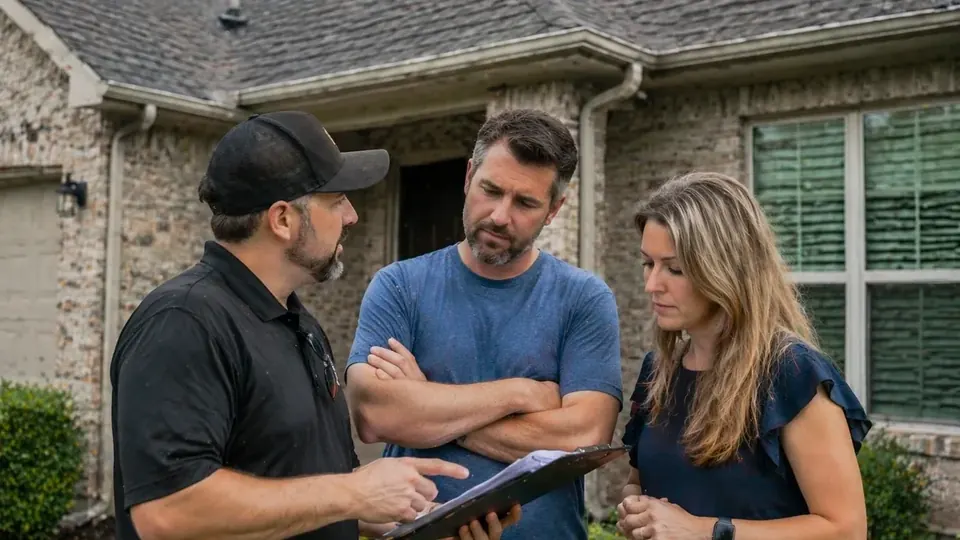
An underpaid insurance claim in Dallas usually looks like this: the insurer agrees the damage is covered, sends an estimate and a check, and then your roofer or restoration contractor tells you the job will cost far more. Underpayments are not always intentional. They often come from a rushed inspection after a major storm, measurement errors, missed items, or pricing that does not match what local contractors charge. Whatever the cause, the gap can usually be traced to specific lines in the estimate. Dallas Public Adjuster helps homeowners and business owners in Dallas County find where that gap comes from and document what is missing.
Timing plays a part. Big North Texas storms, such as the June 12, 2023 storm that dropped hail up to 4 inches near Cedar Hill or the May 28, 2024 windstorm that hit Garland and Richardson, create a surge of claims at the same moment contractors are in high demand. Estimates written in that rush can miss damage, and prices can lag behind what local crews actually charge.
Signs Your Settlement May Be Too Low
- Contractor bids are well above the insurer’s replacement cost total.
- The estimate repairs a few shingles where the roof cannot reasonably be patched with matching materials.
- Gutters, downspouts, vents, flashing, window screens, fences, or siding are missing after a hailstorm.
- Interior water damage is limited to one room even though stains appear in several.
- Depreciation looks unusually high or is applied to labor.
- Code-required items, such as drip edge or underlayment, are left out.
- General contractor overhead and profit is excluded on a job that needs multiple trades.
Where Underpayments Usually Come From
| Category | What goes wrong | How it can be addressed |
|---|---|---|
| Scope | Damaged items or whole elevations are left out | Re-inspection with photos tied to each line item |
| Measurements | Roof squares, pitch, waste, or wall areas are understated | Independent measurements or aerial reports |
| Pricing | Unit costs do not reflect current Dallas-area labor and materials | Comparison with local contractor bids and pricing data |
| Depreciation | Excessive or non-recoverable depreciation applied | Review of policy valuation terms and the age and condition of materials |
| Matching and continuity | Partial repairs that leave mismatched shingles, siding, or flooring | Documentation of material availability and policy language |
| Code items | Required upgrades omitted | Review of ordinance or law coverage and local permit requirements |
For a roof-specific walkthrough, read how to review an underpaid roof insurance estimate.
Depreciation, Deductibles, and the Check You Received
Many Dallas homeowners are surprised by the first payment because two large numbers are subtracted before it is issued. The first is the deductible. Many Texas policies have a separate wind and hail deductible, often 1% or 2% of the dwelling limit. The second is depreciation. Under a replacement cost policy, the insurer typically pays actual cash value first and releases recoverable depreciation after repairs are completed, often within a deadline stated in the policy. If your roof coverage is ACV-only or uses a payment schedule, that depreciation may never be paid.
Understanding which of these applies to you is the first step in knowing whether the claim is actually underpaid or simply paid in stages. Our claim calculator can help you estimate how deductibles and depreciation affect a payment, and replacement cost vs. actual cash value in Texas explains the difference in more detail.
Reopening a Settled or Closed Claim
Many property owners assume that once a claim is closed, it is final. In practice, many Texas policies allow a claim to be reopened in certain situations, usually within a defined timeframe. A closed claim may deserve another look if:
- Additional damage surfaced after the first inspection.
- Repairs uncovered hidden damage, such as rotted decking or wet insulation.
- The original scope or pricing was incomplete.
- The settlement did not reflect the actual cost of repairs.
When new damage is found during work, it is usually handled as a supplemental claim. Check your policy for time limits, and if you have signed any release, have it reviewed before assuming the claim cannot be revisited.
Contents and Living Expense Underpayments
Underpayments are not limited to the building. Personal property is often valued with heavy depreciation, and items may be left off entirely if they were never listed. Additional living expenses can also fall short if receipts were not submitted or the insurer approved only part of the displacement period. A detailed contents inventory with photos and approximate ages, along with organized living-expense receipts, gives the insurer a clear basis to reconsider. Our claim documentation checklist lists what to keep.
Steps to Take If You Think Your Claim Was Underpaid
- Request the insurer’s full estimate, photos, and any reports in writing.
- Get a detailed, line-item bid from a qualified contractor, not just a single total.
- Compare measurements, items, and prices line by line.
- Document missing damage with dated photos and notes.
- Submit a written request for reconsideration with your supporting documents.
- If you still disagree on the amount, review the appraisal provision in your policy.
How Dallas Public Adjuster Can Help
We review your policy and the insurer’s estimate, re-inspect the property, and prepare a detailed Xactimate estimate that reflects the full scope of covered damage. We then present the difference to the insurer with supporting photos, measurements, and documentation, and handle the follow-up. For a quick second opinion before deciding on representation, an insurance estimate review is a good place to start.
We do not promise a higher payment, and coverage always depends on your policy and the facts. If the dispute turns into a lawsuit or bad-faith question, consult a Texas attorney. Fees are disclosed in a written contract before any work begins; Texas law caps public adjuster compensation at 10% of the insurance settlement. To get started, request a Free Claim Review.
Frequently Asked Questions
How do I know if my claim was underpaid?
Compare the insurer’s estimate with a detailed estimate from a qualified contractor or independent estimator. Look at the measurements, the list of damaged items, the unit prices, and how depreciation and the deductible were applied. Large gaps in any of these may point to an underpayment.
Can I dispute an insurance payment after I cash the check?
In many cases, cashing an initial payment does not end the claim, and you can still submit additional documentation. Read any release or settlement language carefully before signing, and ask questions if a document says it is a final settlement.
Why was so much depreciation taken out?
Under a replacement cost policy, insurers usually pay actual cash value first, which is replacement cost minus depreciation, and release recoverable depreciation after repairs are completed. Some Texas roof coverage is ACV-only, so that depreciation is not recoverable. Your policy wording controls.
Can a closed claim be reopened if it was underpaid?
Often, yes, especially when additional damage is discovered during repairs or the original scope was incomplete. Policies may set time limits for reopening claims or recovering depreciation, so act promptly and check your policy.
What if we still disagree on the amount?
If the disagreement is about the amount of the loss, many policies include an appraisal clause that either side can invoke. Each side selects an appraiser, and the appraisers select an umpire. Appraisal generally does not resolve coverage disputes.
Will hiring a public adjuster increase my settlement?
There is no guarantee. A public adjuster can identify missing items, document the damage, and present a detailed estimate, but the result depends on the policy, the facts, and the insurer’s response.