
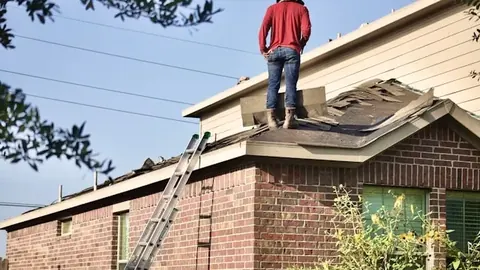
When hail, wind, fire, or water damages a Dallas home or business, the repair has to meet the building codes in force today, not the codes that applied when the building went up. That is true for a 1920s Craftsman in the M Streets, a 1960s ranch in Lake Highlands, and a 2010s office building off the Tollway alike. The gap between how a building was built and how it must be rebuilt is one of the most common sources of confusion on insurance claims. This page summarizes Dallas building codes and how they relate to insurance repairs, using information published by the City of Dallas Planning & Development Department on dallascityhall.com.
Codes, fees, and procedures change. This page is general information, not code consulting or legal advice. Always confirm current requirements with the City of Dallas Planning & Development Department, or with your own city if your property is outside Dallas city limits, before starting work.
Overview: Dallas enforces the 2021 ICC codes
According to the City's Current City Codes and Ordinances page, "2021 International Code Council codes are effective as of May 12, 2023." Each model code is adopted into its own chapter of the Dallas City Code with local amendments, so the Dallas version can differ from the ICC model text. The ordinance adopting the 2021 International Residential Code states that it takes effect on May 12, 2023. The fire code took effect a little earlier, on February 10, 2023, and the electrical code follows its own cycle.
As of our last review, the City had not posted an adoption of the 2024 ICC codes. When it does, the edition and effective date on this page will change, which is one more reason to check with the City before a project starts.
Adopted codes
| Dallas City Code chapter | Model code and edition | Effective |
|---|---|---|
| Chapter 52 | Administrative Procedures for the Construction Codes (permits, exemptions, inspections, contractor registration) | As amended |
| Chapter 53 | 2021 International Building Code, with Dallas amendments | May 12, 2023 |
| Chapter 54 | 2021 International Plumbing Code, with Dallas amendments | May 12, 2023 |
| Chapter 55 | 2021 International Mechanical Code, with Dallas amendments | May 12, 2023 |
| Chapter 56 | 2023 National Electrical Code, with Dallas amendments | May 23, 2025 |
| Chapter 57 | 2021 International Residential Code, with Dallas amendments (Dallas One- and Two-Family Dwelling Code) | May 12, 2023 |
| Chapter 58 | 2021 International Existing Building Code, with Dallas amendments | June 13, 2022 (as listed by the City) |
| Chapter 59 | 2021 International Energy Conservation Code, with Dallas amendments | May 12, 2023 |
| Chapter 60 | 2021 International Fuel Gas Code, with Dallas amendments | May 12, 2023 |
| Chapter 16 | 2021 International Fire Code, with Dallas amendments | February 10, 2023 |
A note on the electrical code: the City's code list still describes Chapter 56 as the 2020 National Electrical Code, but the City's April 2025 letter to electrical contractors states that City Council adopted the 2023 NEC on April 23, 2025, with an effective date of May 23, 2025. That letter also notes an administrative policy that service conductors or equipment damaged by accident, fire, or storm conditions such as ice or falling tree limbs may be restored to their original safe condition without upgrading to the minimum size required for new services. Ask the electrical inspector how that applies to your situation.
Official sources
- City of Dallas: Current City Codes and Ordinances
- Ordinance adopting the 2021 IRC with Dallas amendments (PDF)
- Chapter 52, Administrative Procedures for the Construction Codes (PDF)
- Letter to contractors on adoption of the 2023 NEC (PDF)
- Planning & Development: Residential Permits
- DallasNow, the City's online permitting system
Quick reference for Dallas property owners
| Topic | What the City publishes |
|---|---|
| Roofing | Chapter 52: "New roof coverings must not be applied without first obtaining a permit." Reroofing that does not exceed two roofing squares (about 200 square feet) is on the no-permit list. |
| Debris and final inspection | A reroof permit application must list the sites used to dispose of roofing debris. The final inspection is not approved until proof of disposal at a City of Dallas landfill or transfer station is submitted. |
| Who does the work | Chapter 52 requires contractors, including roof contractors and residential general contractors, to hold a valid City registration. Homeowners working on their own home have a separate homeowner registration and exemption process. |
| How to apply | Online through DallasNow, which the City describes as its portal "for all of our permitting services." |
| In person | Permit Service Center, Oak Cliff Municipal Center, 320 E. Jefferson Blvd., Room 118, Dallas, TX 75203. Main phone (214) 948-4480. Monday–Friday, 8:00 a.m.–4:30 p.m., with no transactions after 4:00 p.m. |
| Wind | Wind design follows the adopted IRC and IBC and the standards they reference. TDI windstorm certification does not apply because Dallas County is outside the TWIA area. |
| Insurance | Code compliance costs may be covered under ordinance or law coverage, which is often a separate, limited coverage or endorsement. A code requirement does not by itself obligate the insurer to pay. |
Roofing repair and replacement in Dallas
Roofs are where building codes and insurance claims meet most often in Dallas. Hail is the most frequently reported severe weather in the NOAA record for Dallas County, and most homes here have composition shingle roofs over brick veneer, while apartments, retail centers, and warehouses often have flat or low-slope TPO or modified-bitumen roofs. When a roof is replaced after hail or wind, the work needs a permit and must meet the roofing provisions of Chapter 9 of the Dallas One- and Two-Family Dwelling Code (the 2021 IRC as amended) or the roofing chapter of the Dallas Building Code for commercial buildings.
Dallas's IRC amendments include a few reroofing-specific rules. The amended Section R908.1 requires that materials and methods used to recover or replace a roof covering comply with Chapter 9, and that individual replacement shingles comply with the roof classification requirements of Section R902.1. The same section exempts reroofing from the minimum one-quarter-inch-per-foot design slope, and from adding secondary overflow drains or scuppers, when the roof provides positive drainage. Dallas also amended the "roof recover" rules that govern when a new covering may go over an existing one, which affects whether a tear-off is required.
Insurer estimates sometimes price the visible roofing material but leave out items that a permitted, code-compliant installation requires, such as proper underlayment, drip edge, starter and ridge components, flashing, debris disposal, and the permit fee itself. Whether those items are owed depends on whether they are part of repairing covered damage under your policy and on any ordinance or law coverage. For more, see roof damage insurance claims, Dallas hail damage claims, and how to review an underpaid roof insurance estimate.
Wind-resistant construction
Dallas County sees severe straight-line winds as well as tornadoes. The NOAA record includes a 115 mph gust measured at Addison Airport on June 14, 1996 (NCEI), winds up to 95 mph in Garland on May 28, 2024 (NCEI), and the EF3 tornado that crossed northwest and north Dallas on October 20, 2019 (NCEI). Wind requirements come from the adopted IRC and IBC and the standards they reference, which assign design wind speeds by location and risk category. We do not list a design wind speed here; your designer, contractor, or Planning & Development can confirm the value for a particular project.
One point causes frequent confusion: TDI windstorm certification applies only within the Texas Windstorm Insurance Association catastrophe area along the coast. Dallas County is not in the TWIA area, so Dallas properties typically get wind and hail coverage from their regular insurer (or the Texas FAIR Plan where applicable), and TDI windstorm certification does not apply.
Permit requirements
Chapter 52 of the Dallas City Code lists the work that does not need a building permit. Everything else generally does. Key points for insurance repairs:
- Roof replacement needs a permit. Only reroofing of two roofing squares or less is exempt, so a small patch may not need one, but a hail replacement will.
- Some exterior work is exempt. The no-permit list includes adding storm windows, screens, shutters, rain gutters, or insulation, and adding trim or siding to single-family or duplex homes.
- Finish work is exempt. Painting, wallpaper, paneling, floor coverings, cabinets, moldings, and countertops do not need a building permit, and neither does interior remodeling of non-load-bearing parts of a single-family or duplex home that does not add floor area.
- Trade work is separate. Electrical, plumbing, and mechanical work has its own permit rules in Chapter 52. That matters after fire and water losses, when walls are opened and systems are replaced. Exempt building work does not make the related trade work exempt.
- Remodel paperwork. The City's residential permit page offers a General Repair Scope of Work form and a remodel checklist, which are useful references when a loss affects several rooms.
Planning & Development notes that many services cannot be completed online in DallasNow, and its Permit Center helps customers in person. Permit costs for covered repairs are often part of a complete repair estimate. Keep copies of permits, inspection results, and fee receipts in your claim file.
Structural repairs
Tornadoes, fallen trees, fire, and long-term water damage can affect framing, trusses, walls, and foundations. Structural repairs require permits, may require engineering, and must meet current code. Dallas's mix of slab-on-grade homes and older pier-and-beam houses in neighborhoods like Lakewood, Lower Greenville, and Oak Cliff means structural repairs can look very different from one street to the next. Rebuilding to current standards can cost more than restoring the original construction, which is where ordinance or law coverage becomes important. Because the International Existing Building Code is part of the adopted package, the extent of required upgrades during repairs may depend on the scope of the work; confirm with Planning & Development.
Foundation movement on expansive Blackland Prairie clay is a separate issue. Many policies exclude settling and earth movement unless it is caused by a covered peril, such as a plumbing leak, so check your policy before assuming a foundation repair is part of a claim.
Code-related upgrades
Code-related upgrades are items that are not "damaged" in the usual sense but must be added or changed because the repair triggers current requirements. Examples can include electrical updates when walls are opened, smoke alarm requirements tied to permitted interior work, energy code items when insulation is replaced, or roofing components required by the amended IRC. Some upgrades apply only when certain thresholds are met. Ask Planning & Development or a licensed contractor which upgrades your project requires, and get that in writing where possible.
Inspections
Permitted work is inspected in stages, ending with a final inspection. For reroofing, the City will not approve the final until proof of debris disposal is submitted, and the building official may require special inspections. Inspection results and any correction notices are useful claim documents because they show what the City actually required on the job. If an inspector requires an item the insurer's estimate left out, that correction notice is strong support for a supplement.
Contractor responsibilities
In most projects the contractor pulls the permit, builds to code, and schedules inspections. Dallas requires contractors to be registered with the City. Before work starts, ask your contractor to confirm the permit, explain which code items are included in the price, and itemize code-required work separately from like-kind repairs. That separation makes it easier to present code items to your insurer. In Texas, a public adjuster may not take part in repairing a property on a claim they adjust, so your contractor and your public adjuster play different roles.
Ordinance or law coverage
Ordinance or law coverage pays, up to its limit, for increased costs to comply with building codes when repairing covered damage. It is often a separate, limited coverage or an endorsement, and the limit may be a percentage of the dwelling coverage or a fixed dollar amount. Some policies have little or none. Check your declarations page and policy forms, and note that some policies pay code-upgrade costs only after the work is actually completed. Our article on building codes and insurance repairs in Dallas explains this in more depth.
A requirement under the City of Dallas's adopted codes does not automatically mean your insurer must pay for it. Payment for code upgrades depends on your policy's ordinance or law coverage, its limits, and its terms. Always read your own policy.
Suburbs have their own building offices
The City of Dallas codes and permits apply only inside Dallas city limits. The surrounding cities are separate jurisdictions with their own building inspection and permit offices, adopted code editions, local amendments, fees, and inspection procedures. That includes Highland Park and University Park, which are surrounded by Dallas, as well as Richardson, Garland, Irving, Mesquite, Carrollton, Grand Prairie, Plano, and Rowlett, plus Addison, Farmers Branch, Coppell, DeSoto, Cedar Hill, Duncanville, Lancaster, and other nearby cities. A roof replacement in Plano or a fire rebuild in Garland follows that city's rules, not Dallas's. If you are not sure which city you are in, check your property tax statement or ask the city.
Code-related claim disputes
Disagreements often involve whether a code item was required, whether it relates to covered damage, or whether the policy includes enough ordinance or law coverage. Helpful steps include:
- Get written confirmation of the requirement from Planning & Development (or your city), an inspector, or a licensed professional.
- Ask your contractor to itemize code-required work.
- Compare the insurer's estimate line by line with the permitted scope.
- Submit a supplement with the documentation, or request an independent estimate review.
If the dispute is over the amount of loss, your policy's appraisal clause may apply. For coverage disputes or legal deadlines, consult a Texas attorney.
Confirm requirements before work
This page reflects our review of City of Dallas sources as of October 20, 2026. Before starting any repair, contact Planning & Development at (214) 948-4480 or visit the residential permits page to confirm permit, code, and inspection requirements for your project. If you have questions about how those requirements affect your claim, request a Free Claim Review from a Dallas Public Adjuster.
Frequently Asked Questions
Which building codes does the City of Dallas use?
The City of Dallas enforces the 2021 International Code Council (ICC) codes with Dallas amendments, effective May 12, 2023. That includes the 2021 International Residential Code (Chapter 57, the Dallas One- and Two-Family Dwelling Code), the 2021 International Building Code (Chapter 53), and the 2021 International Energy Conservation Code (Chapter 59). The electrical code is separate: the City adopted the 2023 National Electrical Code effective May 23, 2025. Confirm current requirements with Planning & Development before work begins.
Do I need a permit to replace my roof in Dallas?
In most cases, yes. Chapter 52 of the Dallas City Code says new roof coverings must not be applied without first obtaining a permit. The only reroofing exemption in the Chapter 52 permit list is for work that does not exceed the equivalent of two roofing squares (about 200 square feet). A full replacement after a hailstorm is far larger than that. Permits are applied for through DallasNow.
Will my insurance pay for code upgrades?
Not automatically. The extra cost of meeting current code when repairing covered damage is usually paid under ordinance or law coverage, which is often a separate, limited coverage or endorsement. Check your declarations page and policy forms to see whether you have it and what the limit is.
I live in Highland Park, Richardson, or another suburb. Do the City of Dallas rules apply?
No. Highland Park, University Park, Richardson, Garland, Irving, Mesquite, Carrollton, Grand Prairie, Plano, Rowlett, and other North Texas cities have their own building inspection and permit offices, adopted code editions, and fees. Check with the city where the property is located before work begins. If you are not sure, your property tax statement shows the taxing city.
Does TDI windstorm certification apply in Dallas?
No. Texas Department of Insurance windstorm certification is tied to the Texas Windstorm Insurance Association (TWIA) catastrophe area along the coast. Dallas County is not in that area, so Dallas properties typically get wind and hail coverage from their regular insurer. Projects still have to meet the wind provisions of the City’s adopted codes.
What if the insurer’s estimate leaves out code-required items?
Document the requirement, for example with an inspection correction notice, the permit record, or the specific code section, and ask the insurer to consider it under any ordinance or law coverage in your policy. A public adjuster can help present those items. For legal disputes or deadlines, consult a Texas attorney.