
Key takeaways
- The NOAA NCEI database lists 109 tornado reports in Dallas County since 1952. Most are EF0 to EF1, but the county has had F4 and EF4 tornadoes.
- The December 26, 2015 Garland/Rowlett EF4 tornado affected nearly 600 homes in Dallas County and destroyed nearly 400 of them.
- The October 20, 2019 EF3 tornado tracked across northwest and north Dallas, from SH-348 and Luna Road across I-35E and Harry Hines Blvd.
- Tornado season peaks in April and May, but October and December have produced some of the county's worst tornadoes.
- Most policies treat tornado damage as windstorm, so the wind/hail deductible usually applies.
- Loss of use, debris removal, ordinance or law coverage, and contents inventories often matter as much as the dwelling estimate.
Few events change a neighborhood as quickly as a tornado. In a few minutes, a street in Garland, Rowlett, or north Dallas can go from normal to roofs missing, walls down, and debris scattered for blocks. Tornado damage insurance claims are also among the most complicated a property owner will ever handle: the dwelling, other structures, contents, living expenses, debris removal, and code upgrades may all be in play at once.
This guide looks at the Dallas County tornado record from NOAA, explains how coverage typically works, and walks through the steps that help a tornado claim go more smoothly.
Dallas County tornado history by the numbers
The NOAA National Centers for Environmental Information (NCEI) Storm Events Database lists 109 tornado reports for Dallas County from 1952 through 2025. Older tornadoes use the original Fujita (F) scale; since 2007 the National Weather Service has used the Enhanced Fujita (EF) scale, which rates tornadoes by the damage they cause.
| Rating | Dallas County reports | Typical damage described by the scale |
|---|---|---|
| F0 / EF0 | 42 | Shingles and gutters damaged, branches broken |
| F1 / EF1 | 35 | Roof surfaces peeled, windows broken, mobile homes overturned |
| F2 / EF2 | 17 | Roofs torn off well-built homes, large trees snapped or uprooted |
| F3 / EF3 | 9 | Entire stories of well-built homes destroyed, heavy damage to large buildings |
| F4 / EF4 | 2 | Well-built homes leveled |
| Not rated | 4 | — |
| Total | 109 |
Source: NOAA NCEI Storm Events Database, Dallas County, Texas. Damage descriptions are general summaries of the Fujita and Enhanced Fujita scales.
About seven in ten Dallas County tornadoes were rated F0/EF0 or F1/EF1. Those weaker tornadoes still cause real claims: roofs stripped of shingles, fences flattened, trees through roofs, and broken windows. The stronger tornadoes are rarer, but they are responsible for the largest losses in the county's history.
When tornadoes strike
May (25 reports) and April (23) are the busiest months, followed by October (14) and March (13). The cool season matters more than many people expect: January has 10 reports and December has 9. Two of the most damaging tornadoes in recent Dallas history struck on December 26 and October 20.
Notable Dallas County tornadoes
| Date | Rating | Area (as described by NOAA) | NCEI record |
|---|---|---|---|
| April 25, 1994 | F4 | Lancaster; 223 homes destroyed, 227 damaged, 58 businesses destroyed | View |
| December 26, 2015 | EF4 | Sunnyvale, Garland, Rowlett; crossed I-30 at the President George Bush Turnpike | View |
| December 26, 2015 | EF3 | Glenn Heights / DeSoto area, about 35 homes damaged in Dallas County | View |
| October 20, 2019 | EF3 | Northwest and north Dallas, SH-348 and Luna Rd. across I-35E and Harry Hines Blvd. | View |
| October 20, 2019 | EF2 | Garland, warehouses on Kenmore St. near W. Miller Rd. | View |
| April 3, 2012 | EF2 | Crossed from Ellis County into DeSoto and Lancaster | View |
| September 8, 2010 | EF2 | West Dallas near Irving Blvd. and Mockingbird Ln. | View |
| May 16, 2021 | EF1 | North of Royal Ln. near Northaven Rd., after an EF0 in Highland Park | View |
| March 16, 2023 | EF1 | Central Irving near MacArthur Blvd. and SH-183 | View |
December 26, 2015: Garland and Rowlett
The EF4 tornado on the night after Christmas 2015 is the strongest in Dallas County since the 1994 Lancaster tornado. NOAA's narrative describes a path a little over 13 miles long, with nearly ten miles inside Dallas County. It began in Sunnyvale, crossed Interstate 30 at the President George Bush Turnpike, and continued through Garland and Rowlett. NOAA reports that the tornado affected nearly 600 homes in Dallas County and destroyed nearly 400 of them, along with 22 businesses. The same storm system produced a separate EF3 tornado that ended at the DeSoto and Glenn Heights city line.
October 20, 2019: north Dallas
On a Sunday night in October 2019, an EF3 tornado formed near State Highway 348 and Luna Road in northwest Dallas and tracked east-northeast. NOAA describes extensive damage to businesses and homes near Harry Hines Boulevard and Walnut Hill Lane, then significant roof damage to gas stations, large commercial buildings, churches, and at least one multi-story apartment complex as the tornado followed Walnut Hill Lane east. The same night, an EF2 tornado heavily damaged warehouses in Garland, including a newly built building whose concrete tilt-up walls collapsed, and an EF1 tornado damaged homes and outbuildings in Rowlett near the President George Bush Turnpike.
That storm is a reminder that Dallas tornado claims are not only residential. Retail centers, apartment complexes, schools, churches, and warehouses all filed claims, each with its own policy terms and business income questions.
Smaller tornadoes, real claims
Brief, weaker tornadoes are more common. On May 16, 2021, one supercell produced an EF0 tornado through Williams Park and Goar Park in Highland Park, then an EF1 with 90 mph winds north of Royal Lane, where a home on Northaven Road had a partial roof collapse. On March 16, 2023, EF1 tornadoes damaged an auto dealership showroom in central Irving and an apartment building on Shady Grove Road. Most of these losses look like severe wind claims, and they are handled the same way.
How tornado coverage typically works
Windstorm is the covered peril
Most homeowners and commercial property policies do not list tornado separately. A tornado is windstorm, and windstorm is generally a covered peril. Dallas County is not in the Texas Windstorm Insurance Association (TWIA) area, so the coverage normally comes from your regular insurer, or from the Texas FAIR Plan where that applies. Rain that enters through a tornado-made opening is usually treated as part of the wind loss, while flooding from overflowing creeks is a separate peril typically excluded by standard policies.
The deductible
The wind/hail deductible usually applies. On many Texas policies it is a percentage of the Coverage A dwelling limit, such as 1% or 2%, so it can be several thousand dollars. On a total loss the deductible is a smaller share of the claim, but on a partial loss it can decide whether minor damage is worth claiming. Your declarations page shows the exact figure.
The coverages that come into play
| Coverage | What it generally addresses after a tornado |
|---|---|
| Dwelling (Coverage A) | Repair or rebuilding of the home's structure |
| Other structures (Coverage B) | Detached garages, fences, sheds, carports |
| Personal property (Coverage C) | Furniture, clothing, electronics, and other contents |
| Loss of use (Coverage D) | Reasonable extra living costs while the home is unlivable |
| Debris removal | Hauling away debris from covered damaged property, often with limits |
| Ordinance or law | Increased costs to meet current building codes, up to its limit |
| Business income (commercial) | Lost income during the restoration period, if purchased |
Coverage names, limits, and conditions vary by policy form. Read your own policy, or have someone read it with you, before you accept a settlement.
Steps after a tornado in Dallas County
- Put safety first. Stay out of damaged structures until they are safe. Watch for downed lines and report them to Oncor, and report gas odors to Atmos Energy.
- Document before cleanup. Take wide shots of the property and street, then close-ups of every room, roof slope, and damaged item. Video walkthroughs help.
- Protect the property. Tarp roofs, board windows, and secure the site. Keep receipts; reasonable emergency repairs are usually reimbursable.
- Report the claim promptly and ask about an advance for living expenses if you cannot stay in the home.
- Start a contents inventory. List items room by room, with approximate age and replacement cost. Photos, receipts, and bank or card statements help. Our claim documentation checklist is a good starting point.
- Keep a claim diary of calls, emails, adjuster visits, and promises made.
- Be careful with contractors who arrive uninvited. Get written estimates and check references before signing.
Rebuilding: codes, permits, and estimates
Heavy tornado damage often means rebuilding to current code. Inside the city, that runs through the City of Dallas Planning & Development Department under the city's adopted International Residential Code and International Building Code. Garland, Rowlett, Irving, Richardson, and other suburbs have their own permit offices. Code-required upgrades are not automatically paid by the base dwelling coverage; that depends on your ordinance or law coverage and its limit. Our guide to building codes and insurance repairs in Dallas explains how this works.
Partial losses on a damaged street
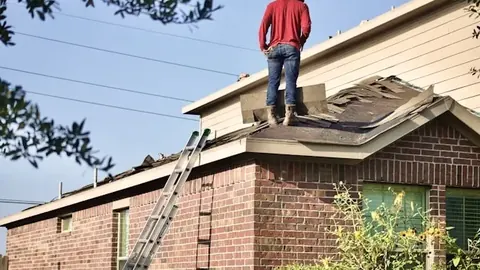
On many tornado claims, the home is not destroyed but is damaged on several sides at once: a roof with missing sections, broken windows, dented siding or gutters, a collapsed garage door, and water stains inside from the rain that followed. These partial losses are where scope disagreements are most common. Hidden damage to framing, decking, and insulation may not show up until repairs begin, so keep the claim open and document anything new that contractors find. A supplemental request with photos and an updated estimate is a normal part of the process.
Large losses also bring replacement cost questions. Many policies pay actual cash value first and release recoverable depreciation after repairs are complete, often within a deadline. Mortgage companies are commonly named on claim checks and may hold funds and release them in stages as work progresses.
How a public adjuster can help with a tornado claim
Tornado claims involve many moving parts, and the first estimate is often written quickly while the insurer is handling hundreds of other losses. Dallas Public Adjuster, a service of Rise Public Adjusting LLC, represents policyholders on tornado damage claims and related wind damage claims across Dallas County. That can include documenting the dwelling and contents, preparing a detailed estimate, tracking living expenses, reviewing code-related costs, and presenting the claim to the insurer.
A public adjuster does not do the repairs and is not a lawyer. Fees are disclosed in a written contract before any work begins; Texas law caps public adjuster compensation at 10% of the insurance settlement, and you can rescind the contract within 72 hours of signing. Every outcome depends on the policy and the facts. If you have questions about a lawsuit, bad faith, or a deadline to sue, talk with a Texas attorney. For anything else about your claim, a Dallas Public Adjuster review is free.
Frequently Asked Questions
Does homeowners insurance cover tornado damage in Dallas?
Most Texas homeowners and commercial property policies treat tornado damage as windstorm damage, which is generally a covered peril. Because Dallas County is outside the TWIA area, that coverage usually comes from your regular insurer. Your wind/hail deductible, policy limits, and any exclusions still apply, so review your declarations page.
Which deductible applies to a tornado claim?
On many Texas policies, the wind/hail deductible applies to tornado damage, and it is often a percentage of the dwelling limit, such as 1% or 2%. Some policies use a flat deductible instead. The exact wording on your declarations page controls.
Will insurance pay for a hotel if a tornado makes my home unlivable?
Many homeowners policies include loss of use or additional living expense coverage, which can pay reasonable extra costs such as temporary housing and higher food costs while the home is being repaired. It usually has its own limit or time period. Keep every receipt and ask your insurer for an advance if you need one.
Is debris removal covered after a tornado?
Many policies cover removal of debris from covered property damaged by a covered peril, sometimes within the dwelling limit and sometimes with additional coverage on top. Tree removal is often subject to a smaller sub-limit. Check your policy and keep invoices from debris haulers.
Should I sign with the first contractor who comes to my door after a tornado?
Take your time. After major storms, out-of-town contractors often canvass damaged neighborhoods. Check licensing where required, references, insurance, and permit history before you sign anything. In Texas, a public adjuster cannot also act as the contractor on a claim they adjust.
What if my insurer’s estimate is too low to rebuild?
Compare the estimate line by line with a contractor’s bid and with current code requirements. You can submit supplemental documentation, request a re-inspection, or, if the disagreement is over the amount of loss, the policy’s appraisal clause may be available. For questions about suits or bad faith, consult a Texas attorney.
Sources and further reading
This article is general information about property insurance claims in Texas, not legal advice, and not a promise of any coverage or outcome. Your policy language and the facts of your loss control your claim.